Brain Anatomy:
Brain Anatomy
The nervous system is divided into central and peripheral systems. The central nervous system (CNS) is composed of the brain and spinal cord. The peripheral nervous system (PNS) is composed of spinal nerves that branch from the spinal cord and cranial nerves that branch from the brain. The PNS includes the autonomic nervous system, which controls vital functions such as breathing, digestion, heart rate, and secretion of hormones.
the brain is composed of the cerebrum, cerebellum, and brainstem. The brainstem acts as a relay center connecting the cerebrum and cerebellum to the spinal cord.
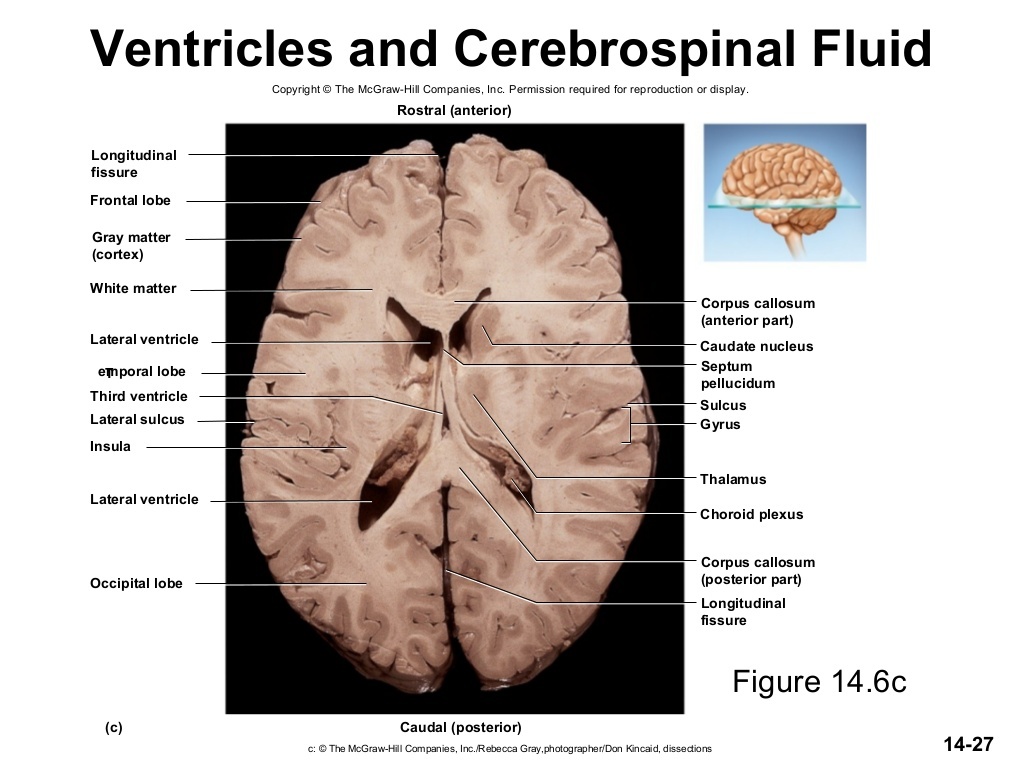
Longitudinal Fissue: Deep grove that seperates cerebral hemispheres
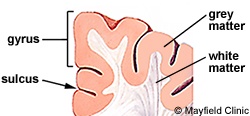
Gyri: Thick folds
Sulci: shallow groves

The brain receives information through our five senses: sight, smell, touch, taste, and hearing - often many at one time. It assembles the messages in a way that has meaning for us, and can store that information in our memory. The brain controls our thoughts, memory and speech, movement of the arms and legs, and the function of many organs within our body. It also determines how we respond to stressful situations (such as taking a test, losing a job, or suffering an illness) by regulating our heart and breathing rate.
- Nervous system:
The nervous system is divided into central and peripheral systems. The central nervous system (CNS) is composed of the brain and spinal cord. The peripheral nervous system (PNS) is composed of spinal nerves that branch from the spinal cord and cranial nerves that branch from the brain. The PNS includes the autonomic nervous system, which controls vital functions such as breathing, digestion, heart rate, and secretion of hormones. - Skull:
The purpose of the bony skull is to protect the brain from injury. The skull is formed from 8 bones that fuse together along suture lines. These bones include the frontal, parietal (2), temporal (2), sphenoid, occipital and ethmoid (Fig. 1). The face is formed from 14 paired bones including the maxilla, zygoma, nasal, palatine, lacrimal, inferior nasal conchae, mandible, and vomer. Inside the skull are three distinct areas: anterior fossa, middle fossa, and posterior fossa (Fig. 2). Doctors sometimes refer to a tumor’s location by these terms, e.g., middle fossa meningioma.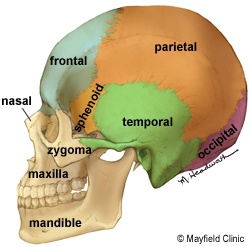
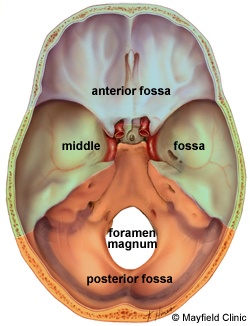
Inside the skull are three distinct areas: anterior fossa, middle fossa, and posterior fossa (Fig. 2). Doctors sometimes refer to a tumor’s location by these terms, e.g., middle fossa meningioma. Similar to cables coming out the back of a computer, all the arteries, veins and nerves exit the base of the skull through holes, called foramina. The big hole in the middle (foramen magnum) is where the spinal cord exits.
The brain is composed of the cerebrum, cerebellum, and brainstem,
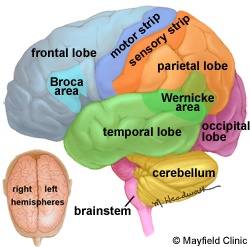
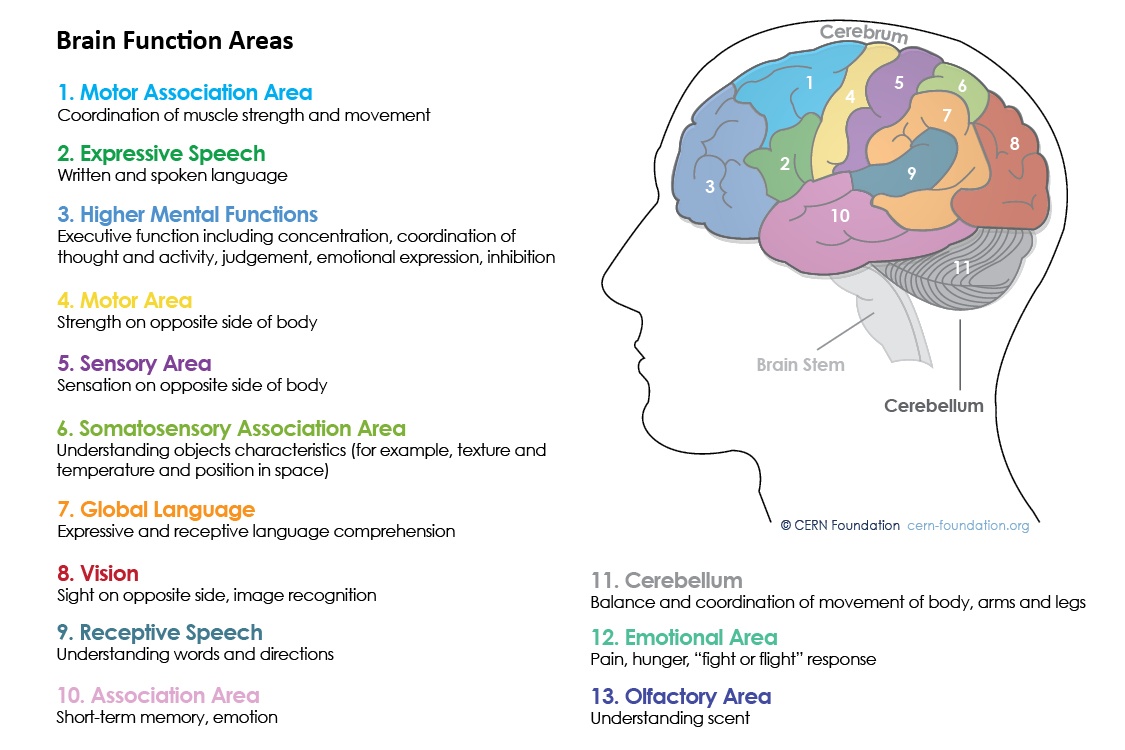
- The cerebrum is the largest part of the brain and is composed of right and left hemispheres. It performs higher functions like interpreting touch, vision and hearing, as well as speech, reasoning, emotions, learning, and fine control of movement.
- The cerebellum is located under the cerebrum. Its function is to coordinate muscle movements, maintain posture, and balance.
- The brainstem includes the midbrain, pons, and medulla. It acts as a relay center connecting the cerebrum and cerebellum to the spinal cord. It performs many automatic functions such as breathing, heart rate, body temperature, wake and sleep cycles, digestion, sneezing, coughing, vomiting, and swallowing. Ten of the twelve cranial nerves originate in the brainstem.
The surface of the cerebrum has a folded appearance called the cortex. The cortex contains about 70% of the 100 billion nerve cells. The nerve cell bodies color the cortex grey-brown giving it its name – gray matter (Fig. 4). Beneath the cortex are long connecting fibers between neurons, called axons, which make up the white matter.
Right Brain- Left Brain:
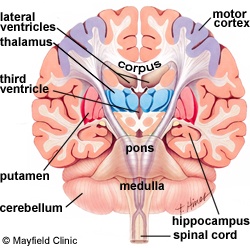
The right and left hemispheres of the brain are joined by a bundle of fibers called the corpus callosum that delivers messages from one side to the other. Each hemisphere controls the opposite side of the body. If a brain tumor is located on the right side of the brain, your left arm or leg may be weak or paralyzed.
Not all functions of the hemispheres are shared. In general, the left hemisphere controls speech, comprehension, arithmetic, and writing. The right hemisphere controls creativity, spatial ability, artistic, and musical skills. The left hemisphere is dominant in hand use and language in about 92% of people.
Deep Structures:
Hypothalamus - is located in the floor of the third ventricle and is the master control of the autonomic system. It plays a role in controlling behaviors such as hunger, thirst, sleep, and sexual response. It also regulates body temperature, blood pressure, emotions, and secretion of hormones.
Pituitary gland - lies in a small pocket of bone at the skull base called the sella turcica. The pituitary gland is connected to the hypothalamus of the brain by the pituitary stalk. Known as the “master gland,” it controls other endocrine glands in the body. It secretes hormones that control sexual development, promote bone and muscle growth, respond to stress, and fight disease.
Pineal gland - is located behind the third ventricle. It helps regulate the body’s internal clock and circadian rhythms by secreting melatonin. It has some role in sexual development.
Thalamus - serves as a relay station for almost all information that comes and goes to the cortex (Fig. 5). It plays a role in pain sensation, attention, alertness and memory.
Basal ganglia - includes the caudate, putamen and globus pallidus. These nuclei work with the cerebellum to coordinate fine motions, such as fingertip movements.
Limbic system - is the center of our emotions, learning, and memory. Included in this system are the cingulate gyri, hypothalamus, amygdala (emotional reactions) and hippocampus (memory).
The brain communicates with the body through the spinal cord and twelve pairs of cranial nerves (Fig. 6). Ten of the twelve pairs of cranial nerves that control hearing, eye movement, facial sensations, taste, swallowing and movement of the face, neck, shoulder and tongue muscles originate in the brainstem. The cranial nerves for smell and vision originate in the cerebrum.
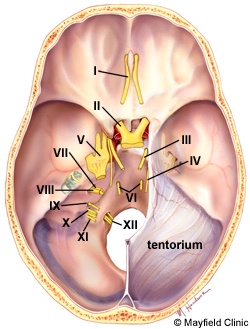
Number | Name | Function |
I | olfactory | smell |
II | optic | sight |
III | oculomotor | moves eye, pupil |
IV | trochlear | moves eye |
V | trigeminal | face sensation |
VI | abducens | moves eye |
VII | facial | moves face, salivate |
VIII | vestibulocochlear | hearing, balance |
IX | glossopharyngeal | taste, swallow |
X | vagus | heart rate, digestion |
XI | accessory | moves head |
XII | hypoglossal | moves tongue |
Meninges
The brain and spinal cord are covered and protected by three layers of tissue called meninges. From the outermost layer inward they are: the dura mater, arachnoid mater, and pia mater.
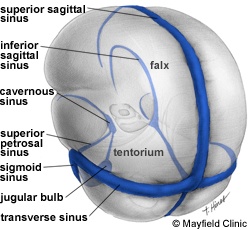
The dura mater is a strong, thick membrane that closely lines the inside of the skull; its two layers, the periosteal and meningeal dura, are fused and separate only to form venous sinuses. The dura creates little folds or compartments. There are two special dural folds, the falx and the tentorium. The falx separates the right and left hemispheres of the brain and the tentorium separates the cerebrum from the cerebellum.
The arachnoid mater is a thin, web-like membrane that covers the entire brain. The arachnoid is made of elastic tissue. The space between the dura and arachnoid membranes is called the subdural space.
The pia mater hugs the surface of the brain following its folds and grooves. The pia mater has many blood vessels that reach deep into the brain. The space between the arachnoid and pia is called the subarachnoid space. It is here where the cerebrospinal fluid bathes and cushions the brain.
<source 2>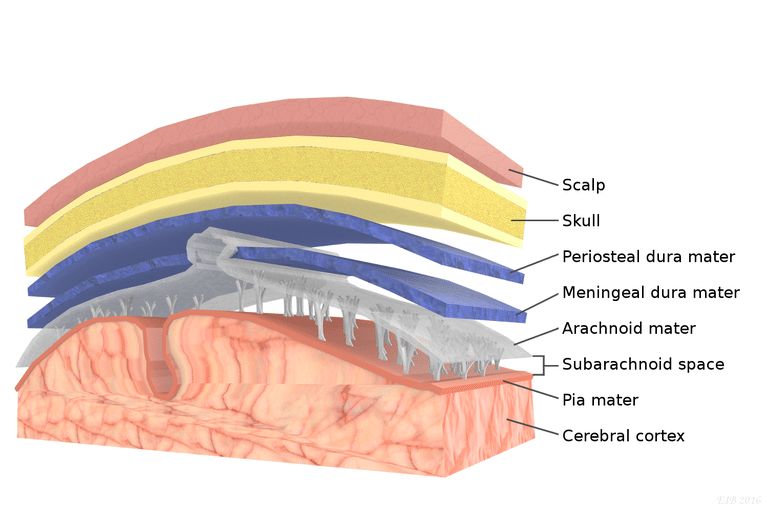
Ventricles and cerebrospinal fluid
The brain has hollow fluid-filled cavities called ventricles (Fig. 7). Inside the ventricles is a ribbon-like structure called the choroid plexus that makes clear colorless cerebrospinal fluid (CSF). CSF flows within and around the brain and spinal cord to help cushion it from injury. This circulating fluid is constantly being absorbed and replenished.
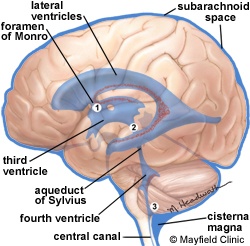
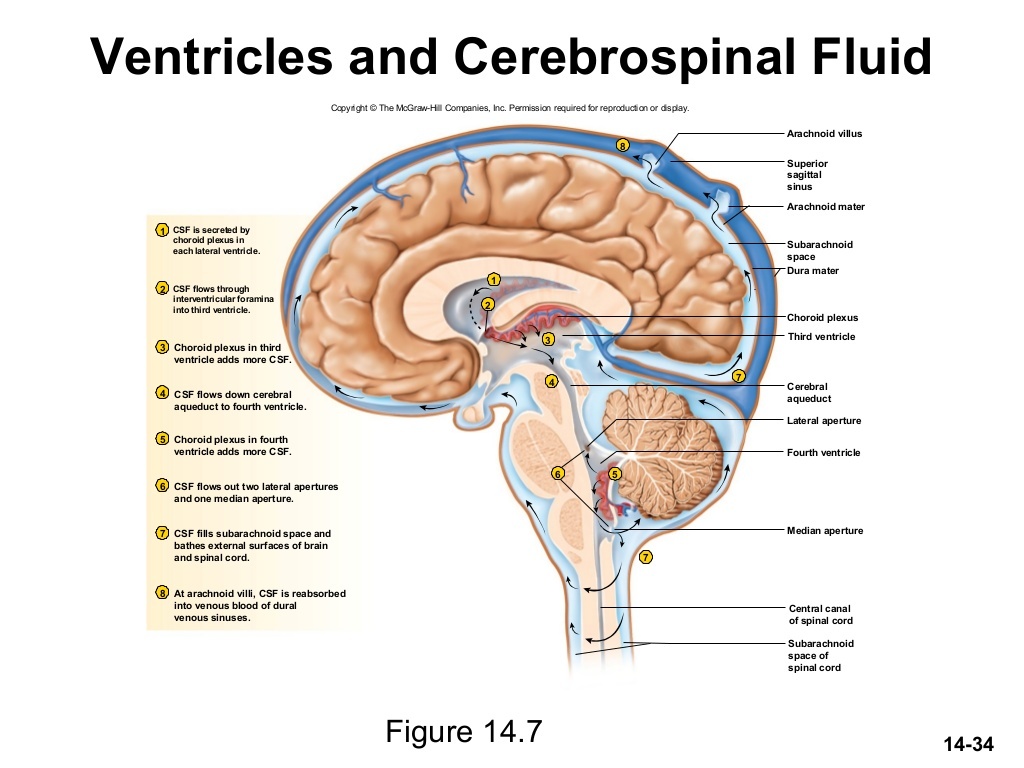
There are two ventricles deep within the cerebral hemispheres called the lateral ventricles. They both connect with the third ventricle through a separate opening called the foramen of Monro. The third ventricle connects with the fourth ventricle through a long narrow tube called the aqueduct of Sylvius. From the fourth ventricle, CSF flows into the subarachnoid space where it bathes and cushions the brain. CSF is recycled (or absorbed) by special structures in the superior sagittal sinus called arachnoid villi.
A balance is maintained between the amount of CSF that is absorbed and the amount that is produced. A disruption or blockage in the system can cause a build up of CSF, which can cause enlargement of the ventricles (hydrocephalus) or cause a collection of fluid in the spinal cord (syringomyelia).
CSF serves several purposes:
- Buoyancy: The actual mass of the human brain is about 1400 - 1500 grams; however, the net weight of the brain suspended in the CSF is equivalent to a mass of 25 - 50 grams.[10][2] The brain therefore exists in neutral buoyancy, which allows the brain to maintain its density without being impaired by its own weight, which would cut off blood supply and kill neurons in the lower sections without CSF.[5]
- Protection: CSF protects the brain tissue from injury when jolted or hit, by providing a fluid buffer that acts as a shock absorber from some forms of mechanical injury.[2][5]
- Prevention of brain ischemia: The prevention of brain ischemia is made by decreasing the amount of CSF in the limited space inside the skull. This decreases total intracranial pressure and facilitates blood perfusion.[2]
- Homeostasis: CSF flows throughout the inner ventricular system in the brain and is absorbed back into the bloodstream, rinsing the metabolic waste from the central nervous system through the blood–brain barrier. This allows for homeostatic regulation of the distribution of neuroendocrine factors, to which slight changes can cause problems or damage to the nervous system. For example, high glycine concentration disrupts temperature and blood pressure control, and high CSF pH causes dizziness and syncope.[5]To use Davson's term, the CSF has a "sink action" by which the various substances formed in the nervous tissue during its metabolic activity diffuse rapidly into the CSF and are thus removed into the bloodstream as CSF is absorbed.[11]
- Clearing waste: CSF provides a mechanism for the removal of waste products from the brain,[2] CSF has been shown by the research group of Maiken Nedergaard to be critical in the brain's glymphatic system, which plays an important role in flushing metabolic toxins or waste from the brain's tissues' cellular interstitial fluid.[12] CSF flushing of wastes from brain tissue is further increased during sleep, which results from the opening of extracellular channels controlled through the contraction of glial cells, which allows for the rapid influx of CSF into the brain.[13] These findings indicate that CSF may play a large role during sleep in clearing metabolic waste, like beta amyloid, that are produced by the activity in the awake brain. Results of Klarica et al. suggest that efflux transport at the capillary endothelium is much more important for brain homeostasis than the removal of potential toxic brain metabolites by CSF "circulation".[4]
Blood supply
Brain is the 2% of the adult body weight but requires 15% of the total blood. Neurons have a high demand of ATP and therefore, oxygen and glucose, and so a constant supply of blood is extremely essential.
- 10 sec loss in the blood flow may cause loss of consciousness
- A 1-2 min interruption might cause a significant impairment of neural functions
- Going for 4 min without blood can cause irreversible brain damage
<Source : https://www.slideshare.net/nicolezemroz/chapt14-lecture-4>
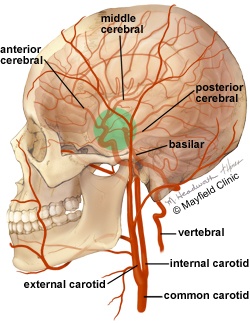
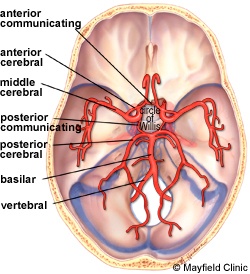
Blood is carried to the brain by two paired arteries, the internal carotid arteries and the vertebral arteries (Fig. 8). The internal carotid arteries supply most of the cerebrum.The vertebral arteries supply the cerebellum, brainstem, and the underside of the cerebrum. After passing through the skull, the right and left vertebral arteries join together to form the basilar artery. The basilar artery and the internal carotid arteries “communicate” with each other at the base of the brain called the Circle of Willis (Fig. 9). The communication between the internal carotid and vertebral-basilar systems is an important safety feature of the brain. If one of the major vessels becomes blocked, it is possible for collateral blood flow to come across the Circle of Willis and prevent brain damage.The venous circulation of the brain is very different from that of the rest of the body. Usually arteries and veins run together as they supply and drain specific areas of the body. So one would think there would be a pair of vertebral veins and internal carotid veins. However, this is not the case in the brain. The major vein collectors are integrated into the dura to form venous sinuses (Fig. 10) - not to be confused with the air sinuses in the face and nasal region. The venous sinuses collect the blood from the brain and pass it to the internal jugular veins. The superior and inferior sagittal sinuses drain the cerebrum, the cavernous sinuses drains the anterior skull base. All sinuses eventually drain to the sigmoid sinuses, which exit the skull and form the jugular veins. These two jugular veins are essentially the only drainage of the brain.
Brain Barrier System:
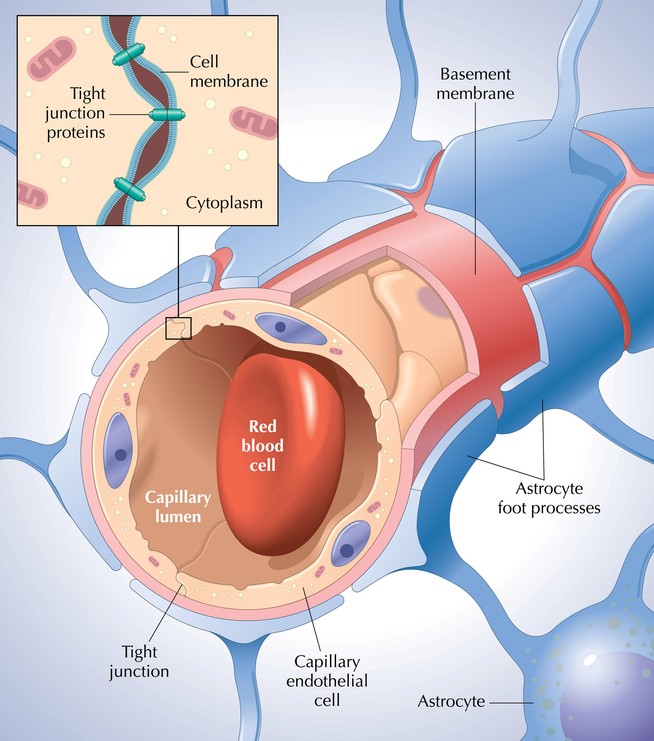
Strictly regulates what substances can get from the bloodstream into the tissue system of the brain.
Two points of entry must be gaurded:
- Blood capillaries through the brain tissues
- Capillaries of the choroid plexus
The blood-brain barrier helps block harmful substances, such as toxins and bacteria from entering the brain. But, scientists knew that the brain also depends upon the delivery of hormones and key nutrients, including glucose and several amino acids, from other organs of the body.
To determine how the brain’s bouncer decides which molecules to welcome in and which to turn away, scientists injected chemicals into the bloodstreams of animals and later measured the amount that arrived in the brain.
Gaining entry into the brain (http://www.brainfacts.org/brain-basics/neuroanatomy/articles/2014/blood-brain-barrier)
Through extensive study, scientists have found that compounds that are very small and/or fat-soluble, including antidepressants, anti-anxiety medications, alcohol, cocaine, and many hormones are able to slip through the endothelial cells that make up the blood-brain barrier without much effort. In contrast, larger molecules, such as glucose or insulin, must be ferried across by proteins. These transporter proteins, located in the brain's blood vessel walls, selectively snag and pull the desired molecules from the blood into the brain.
Cells within and on either side of the blood-brain barrier are in constant communication about which molecules to let through and when. For instance, if the nerve cells in a region of the brain are working particularly hard, they will signal to the blood vessels to dilate, allowing cell-powering nutrients to quickly travel from the blood to the nerve cells in need.
 <Source : https://cias.rit.edu/faculty-staff/101/faculty/340>
Cells of the brain
The brain is made up of two types of cells: nerve cells (neurons) and glia cells.
Nerve cells
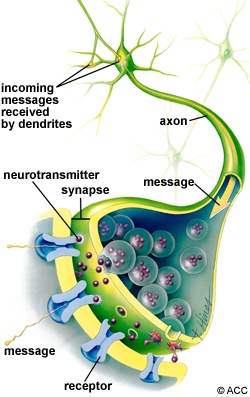
There are many sizes and shapes of neurons, but all consist of a cell body, dendrites and an axon. The neuron conveys information through electrical and chemical signals. Try to picture electrical wiring in your home. An electrical circuit is made up of numerous wires connected in such a way that when a light switch is turned on, a light bulb will beam. A neuron that is excited will transmit its energy to neurons within its vicinity.
Neurons transmit their energy, or “talk”, to each other across a tiny gap called a synapse (Fig. 11). A neuron has many arms called dendrites, which act like antennae picking up messages from other nerve cells. These messages are passed to the cell body, which determines if the message should be passed along. Important messages are passed to the end of the axon where sacs containing neurotransmitters open into the synapse. The neurotransmitter molecules cross the synapse and fit into special receptors on the receiving nerve cell, which stimulates that cell to pass on the message.
Glia cells
Glia (Greek word meaning glue) are the cells of the brain that provide neurons with nourishment, protection, and structural support. There are about 10 to 50 times more glia than nerve cells and are the most common type of cells involved in brain tumors.
- Astroglia or astrocytes transport nutrients to neurons, hold neurons in place, digest parts of dead neurons, and regulate the blood brain barrier.
- Oligodendroglia cells provide insulation (myelin) to neurons.
- Ependymal cells line the ventricles and secrete cerebrospinal fluid (CSF).
- Microglia digest dead neurons and pathogens.
Brain Tumor:
<What> Added by Jake
<How>
Medical science neither knows what causes brain tumors nor how to prevent primary tumors that start in the brain. People most at risk for brain tumors include those who have:
cancer elsewhere in the body
prolonged exposure to pesticides, industrial solvents, and other chemicals
inherited diseases, such as neurofibromatosis
<Types> Added by Jake
<Effects based on the functional area>
Location of different types of brain tumors (img : https://healthcare.utah.edu/healthlibrary/related/doc.php?type=34&id=17824-1)
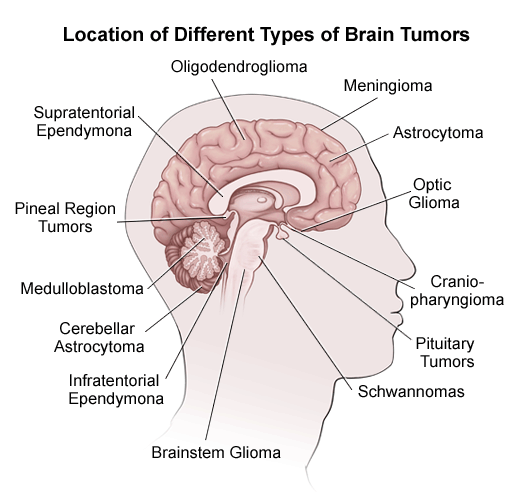

<Details about all the brain tumors : http://braintumor.org/brain-tumor-information/understanding-brain-tumors/tumor-types/>
<2 nd image : https://www.thebraintumourcharity.org/understanding-brain-tumours/symptoms-and-information/adult-symptoms/>
Symptoms due to tumor position (https://www.thebraintumourcharity.org/understanding-brain-tumours/symptoms-and-information/adult-symptoms/)
Symptoms of a brain tumor can vary depending on the tumor's location. See below for an image of the brain.
If a brain tumour is located in the frontal lobe, symptoms may include difficulty with:
- Concentrating
- Speaking and communicating
- Controlling emotions and behaviour
- Learning new information
If a brain tumour is located in the temporal lobe, symptoms may include difficulty with:
- Hearing
- Speaking
- Identifying and categorising objects
- Learning new information
- Correctly identifying emotions in others
If a brain tumour is located in the parietal lobe, symptoms may include difficulty with:
- Bringing together information from your different senses (touch, vision, hearing, smell, taste) and making sense of it
- Co-ordinating movements
- Spatial awareness e.g. judging distances, hand-eye co-ordination
- Speaking, understanding words, writing and reading
If a brain tumour is located in the occipital lobe, symptoms may include difficulty with:
- Vision, for example identifying objects or colours
If a brain tumour is located in the cerebellum, symptoms may include difficulty with:
- Balance
- A loss of co-ordination
- Difficulty walking and speaking
- Flickering of the eyes
- Vomiting
- Stiff neck
- Problems with dexterity (skills in using your hands)
If a brain tumour is located in the brain stem, symptoms may include difficulty with:
- Unsteadiness and difficulty walking
- Facial weakness
- Double vision
- Difficulty speaking and swallowing