Trainer: Matthias Haberl
Max. 14 participants
About the workshop:
WORKSHOP ALREADY FULLY BOOKED!!
Scientists are engaged in complex scientific networks and their work and outputs can have impact on our societies. Scientific results are often contested and reviewed, which ensures the validity of the outcomes. But also, politically scientific research is used or contested to underline certain political decisions and positions. Basically, all disciplines could be involved when societal changes (or keeping of a status-quo) have to be justified. This is especially sensitive in times of crises and conflict.
Relevant discourses take place in various fora, in some we can easily participate, in others we maybe wanted to but they are more distant from our field and again in others it could be necessary but those fora are for some reasons closed for us.
In this workshop we want to reflect on the responsibility of science and of scientists, about our sphere of influence, about the political matter of science and about the impact our scientific work might have. We focus on our own role in the closer and wider scientific community we are placed in and about conflict dynamics that might emerge in the community but also in a wider scale and which means we have for a collaborative and- normatively spoken- democratic conflict resolutions.
The workshop will allow space for peer-exchange, methodological diversity and transfer of the discussions to your field of work.
About the trainer:
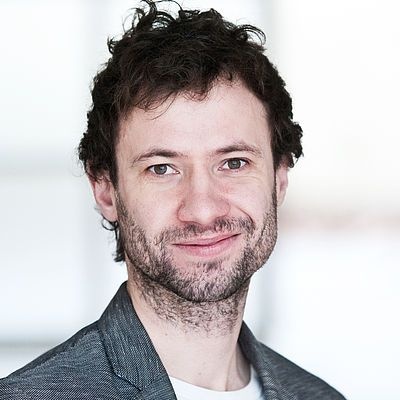
Matthias Haberl from Austria lives in Brussels (Belgium) and has been active as a trainer and facilitator since 2003. He studied Political Science in Vienna and Kraków and Interdisciplinary Balkan Studies in Vienna. He completed a three-year facilitation training at the Theodor-Heuss-Kolleg of the Robert Bosch Foundation and MitOst e.V. He underwent a two-year training as a mediator with a focus on interpersonal conflicts at the ARGE "Lösungsorientiertes Konfliktmanagement" in Vienna as well as the finep Academy on EU Project Management in Berlin.
His work focuses on project management, sustainability, conflict management and international relations (cooperation with the Global South) in universities, foundations, companies and NGOs.
Besides working as trainer and facilitator he is employed in an NGO focussing on labor rights and human rights and advocacy for those topics on the EU level.